 Werner100359 · CC BY-SA 4.0
Erling Haaland goal disallowed after officials rule foul on Bernd Leno
A studio panel said it was baffled by how quickly the on-field officials and the video assistant referee settled the call.
 Werner100359 · CC BY-SA 4.0
Erling Haaland had a goal disallowed on Saturday 21 November after the on-field officials and the video assistant referee judged that he had fouled Bernd Leno. A studio panel of pundits said it was baffled by how quickly the decision was taken and confirmed.
The reaction turned on pace rather than principle. The bafflement was aimed at the speed with which the on-field call and the accompanying review were settled, not at whether the incident was examined at all.
2025/26

Season 2025/26
Why a fast video decision attracts scrutiny
 Werner100359 · CC BY-SA 4.0
The purpose of a review is to catch clear mistakes, which normally means taking time over them. A decision that arrives quickly therefore invites an obvious question: how much of the incident was actually examined before the goal was struck off?
That question carries more weight when the offence is a foul rather than an offside, because a foul is a judgement about contact and force rather than a line drawn across the pitch. Speed is not evidence of a wrong call. But it is the part of the process a watching panel can actually see, and it is the part that drew the reaction here.
What has not been explained
 SonoGrazy · CC BY-SA 4.0
No account of the officials' reasoning has been made public. Neither Haaland nor Leno has spoken about the incident, and no statement has been issued on behalf of the match officials. The two clubs involved have also said nothing publicly about the disallowed goal.
Whether the episode will be taken up by any formal review process has not been indicated. The goal itself will not be restored to the scoreline; a disallowed goal stands once the on-field call and the review behind it have been completed.
What happens next
The most likely development is a fuller explanation of the call, if the officials or the competition concerned choose to give one. Until that arrives, the reaction centres on process rather than outcome: the objection is to the speed of the decision, not to whether the incident was looked at.
A panel reacting live has neither the officials' communication nor the angles they worked from, which makes bafflement at speed easy to voice and difficult to test. That does not settle the merits either way. It does explain why the talking point after the goal was the clock rather than the contact.
For Haaland the practical effect is a goal removed from his record for the match; for Leno it is a foul won. Neither changes without a public explanation that reopens the decision, and none has been offered.
Frequently asked questions
- Why was Erling Haaland's goal disallowed?
- The officials ruled that Haaland had fouled Bernd Leno, and the goal was struck out with the video assistant referee involved in the decision.
- What did the studio panel object to?
- The panel said it was baffled by how quickly the on-field officials and the video assistant referee arrived at the decision, with the speed of the call the focus rather than the merits of the foul.
- Has anyone explained the decision?
- No public account of the officials' reasoning has been issued, and neither Haaland nor Leno has commented on the incident.
Related stories
Werner100359 · CC BY-SA 4.0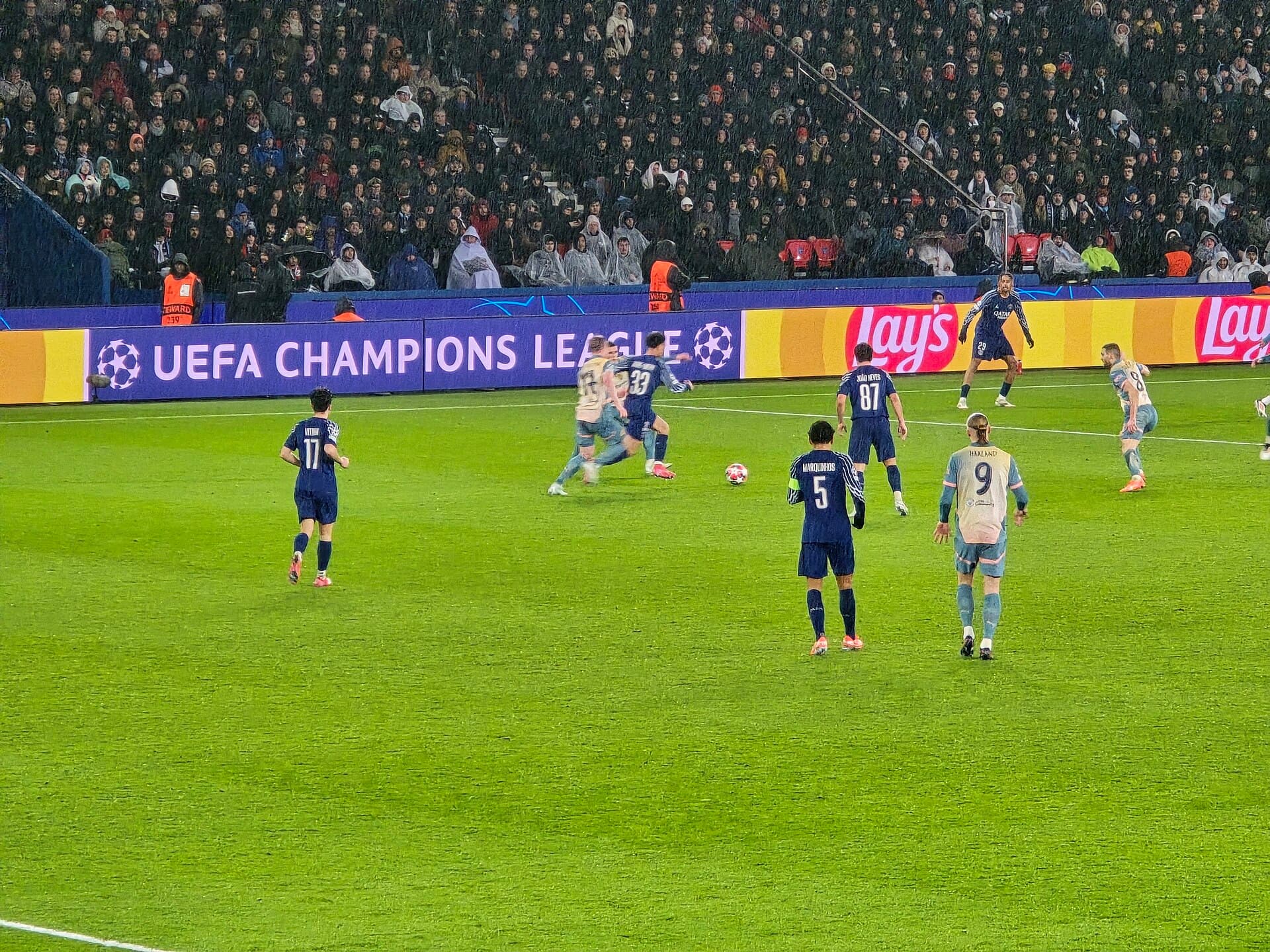 Like tears in rain · CC BY-SA 4.0
Dan James tells Wales to expect a Norway response in Oslo
 Like tears in rain · CC BY-SA 4.0
Erling Haaland films football challenges with YouTuber MrBeast
 Steffen Prößdorf · CC BY-SA 4.0