


 --Steindy (talk) 16:18, 29 August 2019 (UTC) · CC BY-SA 4.0
Ballon d'Or shortlist omits Arsenal forwards as Haaland and Fernandes feature
Premier League
A review tracked 20 players from the Premier League and 60 from elsewhere for five seasons, and argues that patience can matter more than a fast start.
 Bryan Berlin · CC BY-SA 4.0
A five-year follow-up of the 80 young footballers identified in 2021 as having a chance of making it in the game has concluded that breaking through early does not guarantee longevity or future success. The review, published on 30 September 2026, tracked 20 players from the Premier League and 60 from the rest of the world, following each of them across five years.
The exercise rests on a blunt admission: projecting a teenager's career is close to guesswork. The review notes that it is often almost impossible to say how a player will develop, and that the teenagers who look most advanced at 16 or 17 are regularly overtaken by those who arrive more slowly.
 Bryan Berlin · CC BY-SA 4.0
Its central argument is that patience pays. Players who take longer to establish themselves can end up with the more durable careers, while an early debut is no guarantee of staying at the top. The review frames this as a case of slow and steady sometimes winning the race.
 Bryan Berlin · CC BY-SA 4.0
One profile it returns to is a ball-playing central midfielder with football running through his family. His father, Adam, played for Brighton and now manages Worthing FC further along the coast. His great uncle Martin, grandfather Paul and great-grandfather Wally all played too, and academy staff believe his tactical awareness comes from growing up around the game.
The profiles also include a Germany youth international with an unusually crowded early record. He became the youngest player to appear in the Bundesliga at 16 years and one day, made his Champions League debut 17 days later, and scored his first Bundesliga goal 11 days after that. Before turning 17 he was already the youngest player and the youngest scorer for Germany's Under-21 side.
Hindsight flatters everyone. The review concedes that when Lamine Yamal was added to a later intake in 2024, those behind the list had an inkling he might do well — an exception rather than a rule. Yamal is not part of the 2021 group of 80.
The exercise runs every year, so the cohorts chosen after 2021 are still inside their own five-year windows. The 2021 group has now been followed for the full period, which is what allows the review to draw conclusions about early breakthroughs and long careers.
Several things remain open. Neither the clubs involved nor any league or federation has responded to the findings, and the current clubs of the highlighted players have not been set out. No date has been given for a further update on the 2021 group.
--Steindy (talk) 16:18, 29 August 2019 (UTC) · CC BY-SA 4.0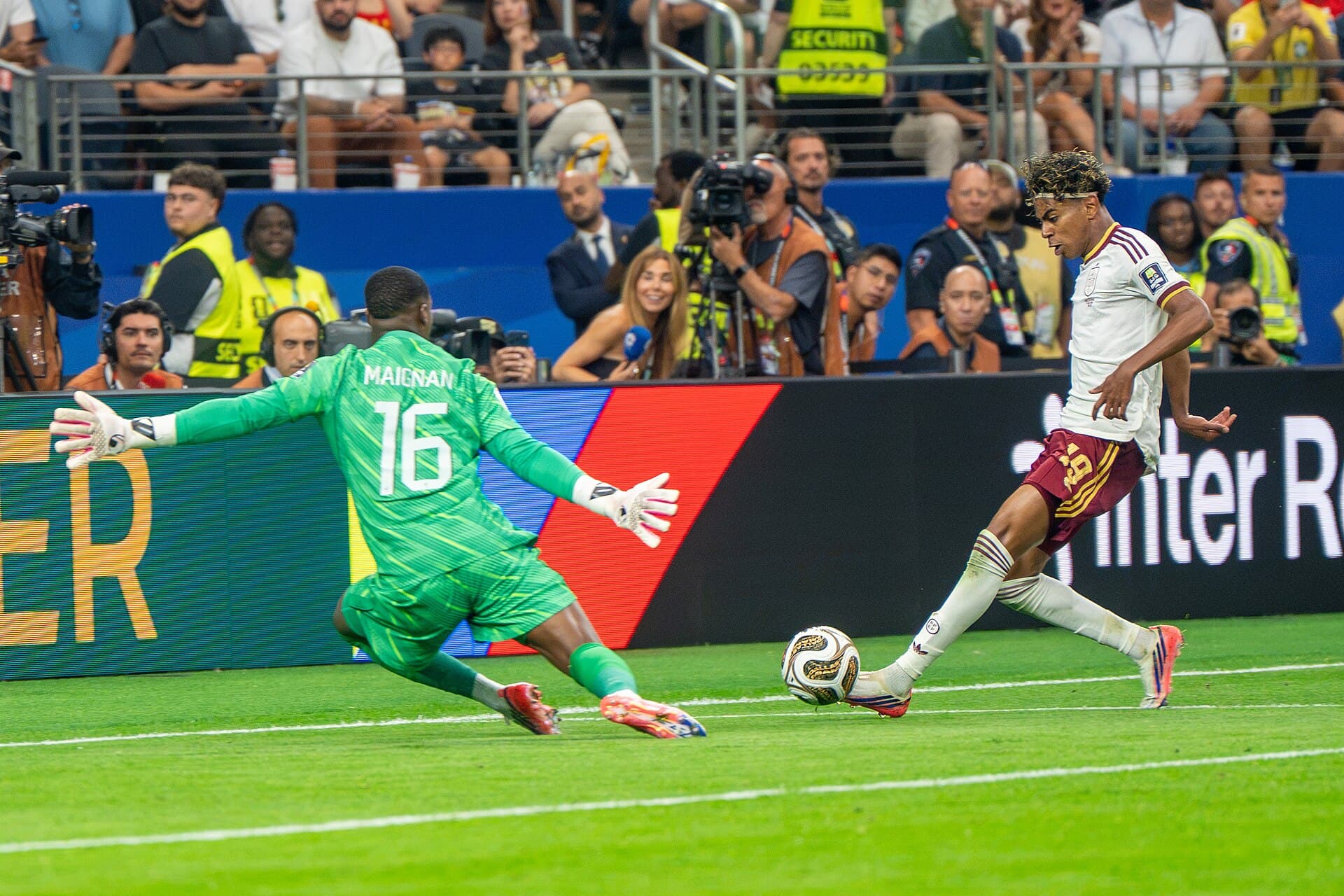 Bryan Berlin · CC BY-SA 4.0
 Ank kumar · CC BY-SA 4.0
 Ratchet8865 · CC BY-SA 4.0